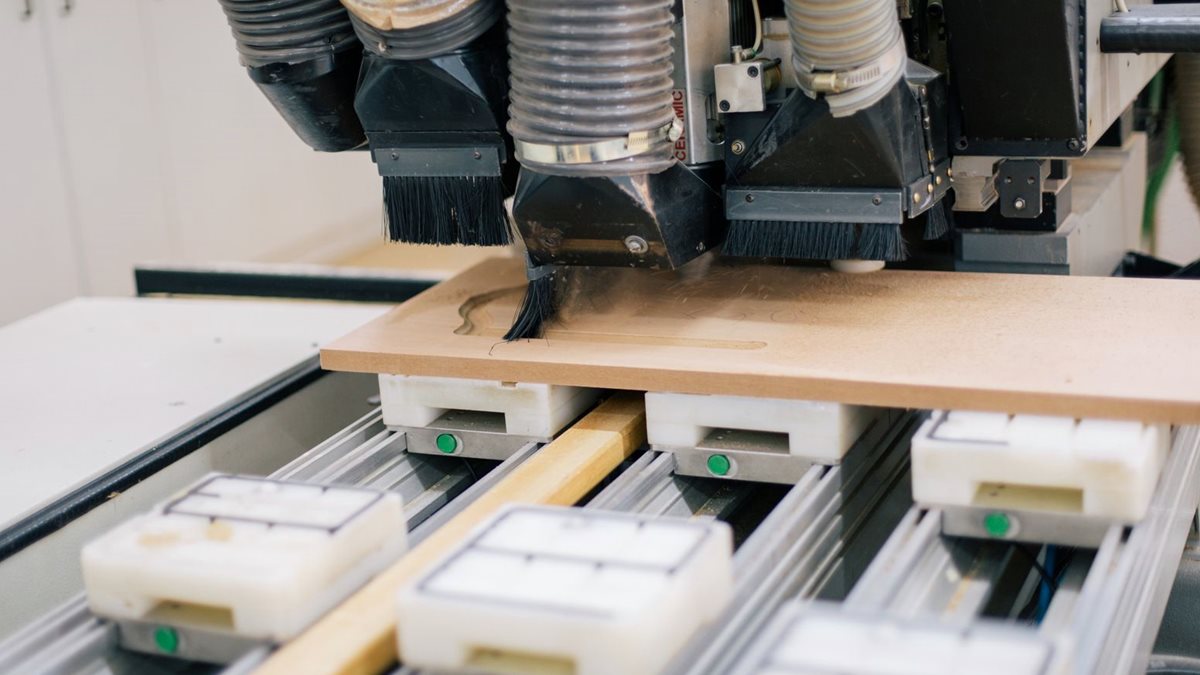
How to Judge Furniture Quality Before You Buy
 Head of Design·July 2, 2026·11 min read
Buying storage furniture online is an act of faith. You can't run your hand along the edge, open a drawer, or lean on a shelf to see if it flexes. You get a set of photos, a bullet list and a price, and from that you have to guess whether the piece will still be solid in ten years or wobbling in one. As the person who designs FACBOTALL's furniture, I spend my days on the making side of that guess, but I buy furniture as a normal person too, and over the years I've built a way of reading a listing that gets it right far more often than not.
This is that method, written down. It's not about brand loyalty; it's about learning to read the signals that separate furniture built to last from furniture built to hit a price, and about spotting genuine value in the wide gap between cheap flat-pack that falls apart and designer pieces that cost three times what they should. The mission behind everything we make, Create a Modern Living, only works if the furniture is actually good, so I have every reason to teach you to tell the difference honestly.
Read the specs, not the adjectives
The first move on any product page is to skip the marketing paragraph and go straight to the specifications. Adjectives are free: "premium," "sturdy," "heavy-duty" cost a copywriter nothing. Numbers are expensive, because a real number came from a measurement or a test. So the quality of a listing is roughly proportional to how specific it is.
Look for a named board and, ideally, a thickness ("15mm reinforced shelves"). Look for a per-shelf weight rating that's specific rather than a suspiciously round, huge figure. Look for the finish to be named: "melamine, water- and scratch-resistant" is a real claim you can hold the maker to, while "premium finish" is a shrug. Look for overall and internal dimensions, because the number people most often regret skipping is the one that decides whether the piece fits the wall and clears the door. A maker who publishes specifics is a maker who tested and measured; a maker who hides behind adjectives is asking you to find out the hard way. I unpack the individual specs in our guide to furniture materials and finishes, but even without the deep dive, the presence or absence of specifics tells you a lot.
| On the product page | Good sign | Warning sign |
|---|---|---|
| Board | Named type + thickness | Just “wood” or nothing |
| Shelf rating | Specific, credible per-shelf number | Round, huge, untested-looking figure |
| Finish | “Melamine, scratch/water-resistant” | “Premium finish” and no detail |
| Dimensions | Overall + internal listed | Only one overall figure |
| Safety | Anti-tip kit “included” | No mention of anti-tip at all |
Read the photos like an inspector
Product photos are built to sell the look, but if you know where to look they also reveal the build. Skip past the beautifully styled hero shot and study the detail images. Zoom into the edges: are they clean and sealed all the way round, or can you see raw board on the back and interior edges? Look at the joints and corners: do panels meet tightly and squarely, or are there gaps? Look at the back panel: a solid or properly fitted back braces the whole piece against racking, while a flimsy stapled-on sheet is a corner cut.
Look, too, at what the photos don't show. If there's no clear shot of a drawer fully open, no close-up of a hinge, no image of the assembled back. That omission is often deliberate, because those are the areas a budget piece would rather you didn't examine. A confident maker shows you the drawer runners and the anti-tip bracket because they're proud of them. And check whether the photos match the words: a listing that claims "solid" but only shows dreamy lifestyle angles at a flattering distance is hoping you won't ask to see the corners. On our product pages we deliberately include the angles that show the build, not just the styling: the detail shots and, where we have it, video of the piece in a real room.
A confident maker photographs the drawer runners and the anti-tip bracket. If a listing only shows dreamy lifestyle shots from a flattering distance, ask yourself what it's not showing you.Wei Zhang, Head of Design
Read the reviews properly
Reviews are the closest you'll get to touching the furniture before it arrives, but only if you read them properly, which means ignoring the star average and reading the words. A 4.4 average can hide a piece that's brilliant but hard to assemble, or one that's easy to build but a bit flimsy; the number won't tell you which, but the text will.
Read the middle reviews, not just the five-star raves and the one-star rants. Three- and four-star reviews are where the honest, specific detail lives: "great once it's together but give yourself two hours," or "sturdy but one drawer front needed re-aligning." Look for patterns across many reviews rather than any single opinion: one person's damaged box is bad luck, but ten people mentioning a wobble is a design signal. And weigh reviews that describe long-term use ("still solid after two years") more heavily than first-impression ones, because most furniture failures are time-based. We publish the real reviews on each product page, the measured ones as well as the glowing ones, precisely because a wall of five-star reviews with no texture is less trustworthy than a spread that tells you what you're actually getting.
Match the type to the room
Once you can judge whether a piece is well made, the next question is whether it's the right piece for your room, and that's where a lot of otherwise-good purchases go wrong. Storage furniture comes in shapes designed for different problems, and matching the shape to the room is half the decision.
If you have a wall to fill and a lot to store, a wide or triple-wide bookcase turns a whole wall into organised storage in one piece rather than a jumble of small units. Our 75-inch triple-wide bookshelf is built for exactly that. If you have height but little floor, a tall narrow tower like the 82-inch open bookshelf uses vertical space you're otherwise wasting. If you have an awkward corner, a corner bookshelf reclaims space most furniture ignores. If the problem is a cramped kitchen, a freestanding pantry cabinet adds a whole wall of storage plus a countertop. And if it's the entryway shoe pile or a bathroom's wasted sliver of wall, a shoe or slim cabinet is designed for precisely that gap. The best-made bookcase in the world is the wrong buy if it's the wrong shape for your room.
| Your problem | The shape that solves it | Example |
|---|---|---|
| A wall to fill, lots to store | Wide / triple-wide bookcase | 75" triple-wide bookshelf |
| Height but little floor | Tall narrow tower | 82" open bookshelf |
| An awkward corner | Corner bookcase | 73.5" L-shaped corner |
| A cramped kitchen | Freestanding pantry | 74" pantry cabinet |
| Entryway shoe pile | Shoe cabinet | Wide farmhouse shoe cabinet |
| A slim wasted gap | Slim floor cabinet | 13.8" bathroom cabinet |
Where the value really is
Now the part everyone actually cares about: price, and specifically value rather than sticker price, because the cheapest piece and the best-value piece are rarely the same object. Storage furniture splits into two traps. At the bottom, cheap flat-pack that's thin, unbanded and under-specified. It looks fine in the showroom and wobbles within a year, so you buy it twice. At the top, designer pieces where a large part of the price pays for the brand name and the showroom rather than the build. The value sits in the honest middle: the material and finish of the expensive pieces at a price a normal home can say yes to.
The way to find that middle is to price a piece against what it replaces and how long it lasts, not against the cheapest thing on the page. A well-built bookcase that stays solid for a decade is cheaper per year than a flimsy one you replace twice, even if it costs more today. A pantry that turns a cramped kitchen into a functional one is worth more than its price in daily ease. When you weigh furniture, weigh it over years of use, not over the checkout total: that's the horizon on which good furniture pays for itself.
Cheap isn't value if you rebuild it in a year. Designer isn't value if you're paying mostly for the logo. The value is the honest middle — real materials at a fair price.Wei Zhang, Head of Design
Factor in assembly and safety honestly
Two practical things get underrated in the excitement of choosing a piece, and both are worth a clear-eyed look before you buy. The first is assembly. Flat-pack furniture arrives as a kit, and larger pieces, tall bookcases, wide units, pantries, are a genuine project of one to two hours, easier and safer with a second person. That's a fair trade for the price and the fact it arrives intact, but it's a real one: factor in who's going to build it. The tell of a maker who takes assembly seriously is jig-drilled holes that line up, numbered hardware, and clear instructions: all things we obsess over and describe in our manufacturing walkthrough.
The second is safety, and it's non-negotiable for anything tall. A tall bookcase, dresser or cabinet must be anchored to the wall with an anti-tip kit: it's the one genuinely serious risk in this category, and it's entirely preventable in five minutes. Check that the piece includes anti-tip hardware as standard (ours do), and actually fit it, especially in a home with children or pets. A maker that includes the safety hardware by default rather than selling it separately is a maker thinking about your home, not just the sale.
Common buying mistakes, and how to avoid them
After years of reading customer questions and the occasional return, the same avoidable mistakes come up again and again. Knowing them in advance saves the most disappointment, and none of them are about being an expert: they're about slowing down for five minutes before you click buy.
Not measuring the space. The single most common regret isn't about quality at all. It's a piece that's beautiful and well made but doesn't fit, or fits the wall and then blocks a door or a radiator. Measure three things every time: the floor the piece can occupy, the height (decisive for tall units), and the swing space for doors, drawers and the route in. A tape measure prevents the majority of returns.
Buying on the star average alone. A 4.4 and a 4.6 can hide completely different experiences. Two minutes reading the actual review text, especially the three- and four-star ones — tells you more than the number ever will. The average is a headline; the words are the story.
Assuming the cheapest is the best value. It rarely is. The lowest price on the page is usually the thinnest board, the unbanded edges and the untested glides: the piece you replace in a year. Price over a decade of use, not over the checkout total, and the honest middle almost always wins.
Ignoring assembly and safety. A tall bookcase is a real build and a real tipping risk. Be honest about who will assemble it, and never skip the anti-tip hardware. Neither is a reason not to buy. They're just facts to plan around, and a maker that includes the safety kit and clear instructions has already done the hard part for you.
The five-minute buying checklist
Put it all together and you can vet almost any piece of storage furniture in about five minutes. Here's the checklist I actually use:
- Specs: Is the board named with a thickness, the shelf rating specific, the finish named, the dimensions complete?
- Photos: Are the edges sealed all round, the back solid, the joints tight — and do the detail shots exist at all?
- Reviews: Do the middle and long-term reviews describe a solid piece, and is there a pattern of praise or of the same complaint?
- Fit: Is this the right shape for your room, and have you measured the wall, the door and the swing space?
- Safety & assembly: Is anti-tip hardware included, and are you realistic about the build?
- Value: Priced over a decade of use, not against the cheapest thing on the page, is this the honest middle?
If this method helps you buy well, from us or anyone, it's done its job. To understand what you're judging, read how storage furniture is actually made and what it's made of. And when you're ready to apply the checklist, the full FACBOTALL range is organised by exactly the room-problems above, with the specs, photos, video and honest reviews to judge each piece for yourself.
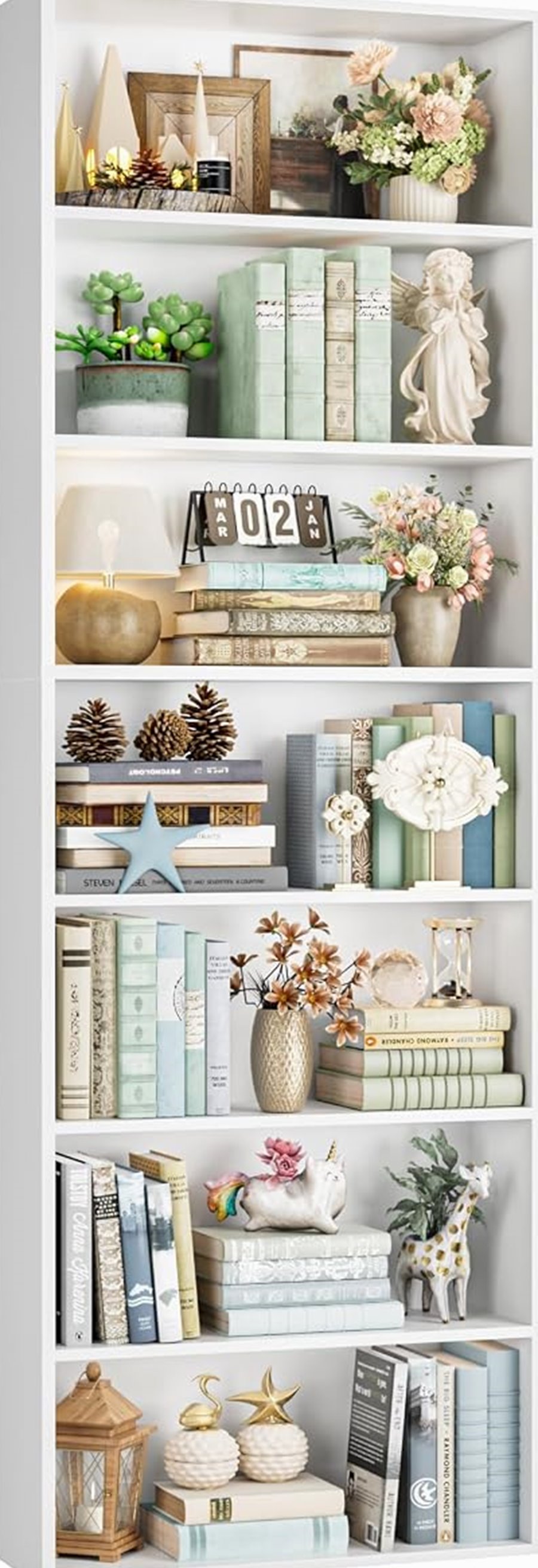
82" Tall Bookshelf, 7-Tier Open Shelves, White
Run the checklist on this one: a specific footprint and shelf count, sealed edges, hundreds of real reviews averaging strong, anti-tip included, and a tall-narrow shape for exactly the height-but-no-floor problem. That's what "passes the checklist" looks like.
View details & specs →Wei Zhang
Head of Design · FACBOTALLPart of the team behind FACBOTALL's storage furniture. Read more about how we work, or browse the full range.